Riviera Hotel & Casino History: The Rise and Fall of The Riv
The Riviera, or simply “The Riv,” mattered because it changed the shape of the Strip. Other classics such as the Sahara and Sands defined the early boulevard in style and entertainment terms, but the Riviera helped push Las Vegas toward the taller, denser resort future that later became normal.
The First High-Rise Moment
When the Riviera opened on April 20, 1955, it introduced something the valley had not yet seen: a true high-rise resort profile on the Strip. At nine stories, it was the first skyscraper in the Las Vegas Valley, and that alone made it historically important. The building suggested that Las Vegas was ready to imagine itself as something more ambitious than a neon-lined roadside corridor.
That ambition fit the era. Mid-1950s Las Vegas was still figuring out what kind of destination it wanted to be, and the Riviera pushed the answer toward scale, sophistication, and permanence. It looked less temporary than many earlier properties and more like a serious urban resort.
Expansion, Reinvention, and Survival
The Riviera did not enjoy a simple, uninterrupted climb. It faced financial trouble more than once, including bankruptcy filings, and it had to keep adapting as the Strip changed around it. But that struggle is part of what makes the resort interesting. The Riv kept surviving.
Through expansions in 1966, 1975, and 1988, the property grew from a nine-story statement into a much larger resort complex. By then it occupied an increasingly unusual middle ground: older than the newest megaresorts but still substantial enough to compete. That same balancing act showed up at places like the Stardust and Frontier, though the Riviera always carried a more distinctly vertical identity.
Entertainment, Conventions, and the Personality of The Riv
The Riviera also built a strong entertainment reputation. Performers including Liberace and Tom Jones helped keep it relevant, and its convention strategy gave it another path to survival when gaming and tourism patterns shifted. Unlike some vanished resorts that are remembered mostly for a sign or an implosion clip, the Riviera left behind a broader operational legacy.
It also had a specific vibe longtime visitors still talk about: less cartoonishly themed than some later neighbors, more relaxed than the grandest luxury resorts, and just old-school enough to feel personal. That atmosphere helped the property outlive many competitors even when it no longer felt cutting-edge.
Closure and the Convention Center Future
The final chapter came in 2015, when the Las Vegas Convention and Visitors Authority acquired the property for convention-center expansion. The Riviera closed on May 4, 2015, and demolition followed. In practical terms, the site was simply too valuable to remain an aging resort in a part of town being reimagined for a different future.
Still, the Riviera’s loss felt significant because it represented more than another old hotel disappearing. It marked the fading of one of the Strip’s clearest physical links between the low-rise 1950s and the vertically ambitious city Las Vegas became. The Riv helped teach the Strip to build upward, and that alone keeps it central to the story of old Vegas.
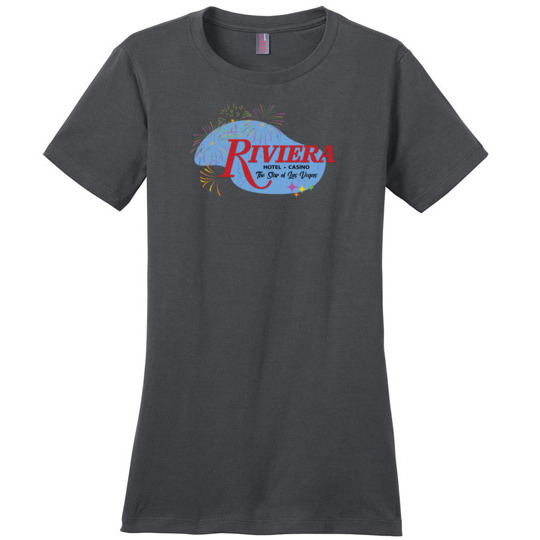
🎰 Shop the Riviera Hotel and Casino Las Vegas Collection
Own the nostalgia
Get the free 1948 Golden Nugget Gaming Guide
Want more old Vegas in your inbox? Grab the Free 1948 Golden Nugget Gaming Guide for a collector-friendly piece of downtown history, plus the best follow-up stories and first-look merch picks.
Prefer merch first? The store already has a first-order offer waiting.
Frequently Asked Questions
When did the Riviera open on the Las Vegas Strip?
The Riviera opened on April 20, 1955, and was the first high-rise resort in the Las Vegas Valley.
Why was the Riviera important in Las Vegas history?
The Riviera helped move the Strip from low-rise roadside properties toward larger, more urban resort development.
Why was the Riviera demolished?
The Riviera closed in 2015 after the Las Vegas Convention and Visitors Authority bought the site for convention-center expansion and redevelopment.