Sands Hotel & Casino History: Rat Pack Glory to Venetian
Few names carry more old Vegas weight than the Sands. If the Dunes represented polished Strip luxury and the Stardust captured big-resort ambition, the Sands became the place where celebrity, casino glamour, and Las Vegas mythology fused into one story.
From Early Strip Resort to Cultural Symbol
The Sands opened in December 1952 as one of the first generation of major Strip resorts. It was not the largest property in town, but it landed early enough to help define what a Las Vegas resort could be: hotel rooms, casino action, entertainment, and a carefully manufactured sense of exclusivity. Architect Wayne McAllister gave it a memorable visual identity, and the property quickly earned a reputation that stretched well beyond Nevada.
Its ownership history also reflected the more complicated side of mid-century Vegas. Financial backing and influence from underworld-linked figures helped shape the property’s early life, something that placed the Sands in the same murky historical conversation as resorts like the Dunes and the Desert Inn. That tension between showbiz polish and darker financing is part of what makes the Sands feel so quintessentially old Vegas.
The Rat Pack Years
The Sands became immortal because of entertainment. When Frank Sinatra began headlining there in the 1950s, the property turned into more than a hotel-casino. It became a cultural stage set. Dean Martin, Sammy Davis Jr., Peter Lawford, and Joey Bishop helped transform the Copa Room into shorthand for the city’s coolest era.
This is the period most people mean when they talk about “classic Las Vegas.” The Sands sold a fantasy of access: movie stars, late-night lounge energy, tuxedos, wisecracks, and a sense that the Strip was still intimate enough for personalities to define it. The hotel’s appearance in Ocean’s 11 only deepened that legend and helped keep the Sands alive in pop culture long after its demolition.
Reinvention Under Howard Hughes and Adelson
The Sands survived because it kept adapting. Howard Hughes bought the property in 1967 and expanded it, pushing the resort toward a bigger and more modern footprint. But by the late 1980s, simply being famous was no longer enough. Newer resorts were larger, louder, and more capital-intensive.
When Sheldon Adelson and his partners bought the Sands in 1989, they saw a different future for the site. The addition of the Sands Expo and Convention Center in 1990 was a signal that Las Vegas was shifting toward convention business and larger-scale destination economics. In that sense, the Sands became both a relic and a bridge: a Rat Pack icon trying to survive in a city that was moving on.
Demolition and the Venetian Era
The end came on November 26, 1996, when the Sands was imploded before thousands of spectators. Its replacement, The Venetian, showed how decisively the Strip had changed. The new model emphasized giant themed resorts, convention traffic, and a more corporate version of spectacle.
Even so, the Sands remains one of the clearest symbols of old Vegas at its most cinematic. The name still conjures the Copa Room, Ocean’s 11, and the era when a single hotel could stand at the center of the city’s cultural imagination.
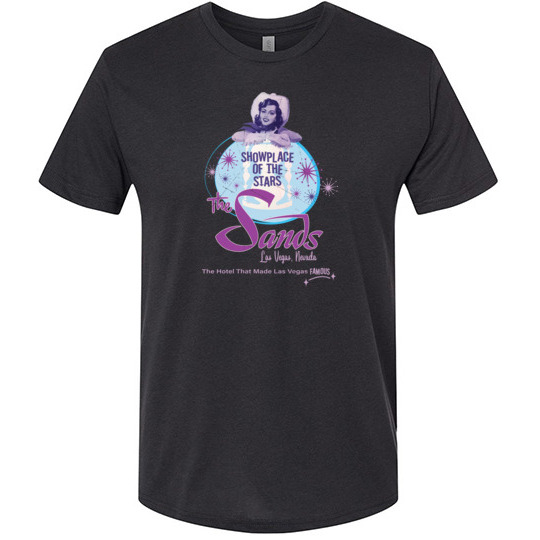
🎰 Shop the Sands Hotel and Casino Las Vegas Collection
Own the nostalgia
Get the free 1948 Golden Nugget Gaming Guide
Want more old Vegas in your inbox? Grab the Free 1948 Golden Nugget Gaming Guide for a collector-friendly piece of downtown history, plus the best follow-up stories and first-look merch picks.
Prefer merch first? The store already has a first-order offer waiting.
Frequently Asked Questions
When did the Sands Hotel and Casino open?
The Sands opened on December 5, 1952, and quickly became one of the defining resorts of the early Strip.
Why is the Sands so closely tied to the Rat Pack?
Frank Sinatra and the rest of the Rat Pack made the Sands their signature stage, turning it into one of the most famous entertainment addresses in Las Vegas.
What replaced the Sands after it was demolished?
The Sands was imploded in 1996, and The Venetian later rose on the site as part of a larger convention-focused redevelopment strategy.