The Treasury Hotel & Casino Las Vegas: A Quirky Western Chapter in Strip History
A Chameleon of a Casino: From Howard Johnson’s to The Treasury
The Las Vegas Strip has always been defined by reinvention. Properties rise and fall, names change with bewildering frequency, and themes come and go like desert wind. But few locations demonstrate this dynamism as vividly as the property currently known as the OYO Hotel & Casino, located at 115 East Tropicana Avenue. Its history is a microcosm of the era, showcasing the sometimes-risky bets and fleeting fads that shaped vintage Las Vegas.
Originally built in 1973 as a Howard Johnson’s hotel, the property provided a familiar, family-friendly option on the burgeoning resort corridor. However, the motel’s fate was far from static. By 1975, it transitioned to the Paradise Hotel and Casino, a brief stint quickly followed by the ambitious (and ultimately unsuccessful) rebranding as the 20th Century Hotel & Casino. It wasn’t until 1978 that the property found its most distinctive personality: The Treasury Hotel & Casino.
Country & Western Flair on the Strip
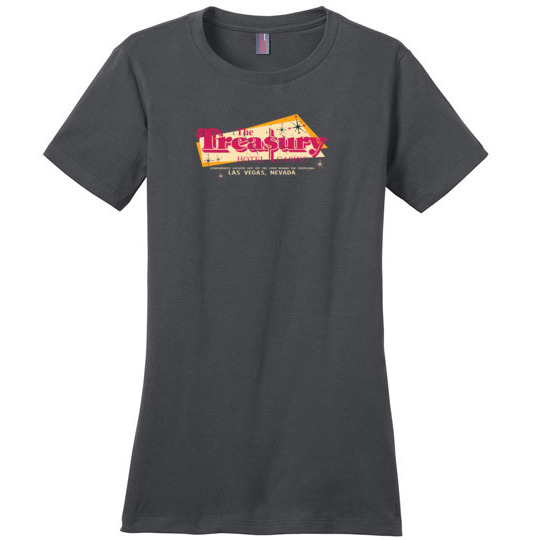
The Treasury stood out. While Vegas was embracing opulent, glitzy themes – think Caesars Palace and the Mirage – The Treasury took a decidedly different route: a full-blown country and western motif. It was a bold move in the late 70s and early 80s, an era favoring extravagance. However, The Treasury leaned into the quirkiness. Showgirl statues, decked out in cowboy hats and fringed jackets, graced the signage. Parking lot columns were transformed into theatrical, western-inspired props, a visual declaration of its unique brand. This was a deliberate attempt to capture a niche market, one seeking something different from the typical Vegas experience. Period photographs from 1981 to 1983 vividly illustrate the theatricality.
Short-Lived Prosperity and a Quick Demise
The Treasury’s time was unfortunately brief. In 1982, the property was purchased by former football player Gerry Philbin. Unfortunately, Philbin lacked the necessary Nevada gaming license, which led to the casino operations being abruptly shut down. The hotel portion lingered on for a short while before its trajectory took another dramatic turn.
Rebranding and Legacy
The property’s legacy isn’t about longevity, but about its ability to adapt and reflect changing times. Following Philbin’s departure, the property underwent a succession of rebrandings – the Pacifica Resort, the Polynesian, and the Hôtel San Rémo – each a fleeting attempt to capture a new wave of consumer interest. In 2006, it became the Hooters Casino Hotel, a sign of the evolving entertainment landscape. Now, as the OYO Hotel & Casino, the site continues to operate, a testament to the enduring value of the location, even as its identity continues to evolve. While The Treasury is just a memory, it remains a fascinating case study in Las Vegas history: a reminder that sometimes, the most memorable properties are the ones that dare to be different.