The Royal Inn Hotel and Casino: A Forgotten Gem of Vintage Las Vegas
A Humble Beginning: Part of a National Chain
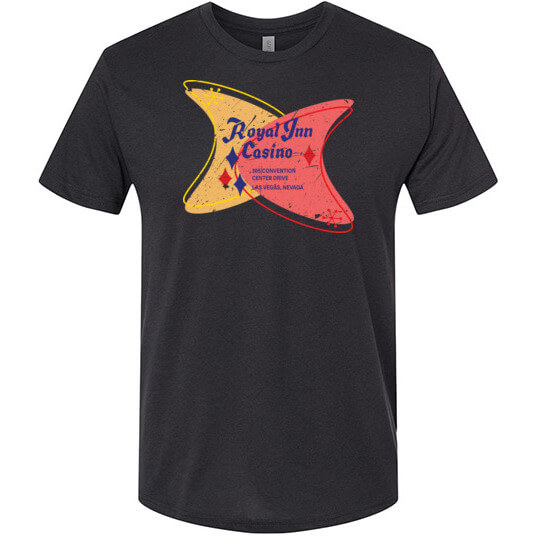
The Las Vegas Strip wasn’t always the sprawling mega-resort landscape we know today. Back in 1970, a 12-story, 200-room hotel appeared east of the Strip, quietly joining the ranks of Vegas establishments. This was the Royal Inn and Casino, a franchise property of Royal Inns of America, a chain with locations across the US. Construction kicked off on August 1, 1969, costing a then-significant $3 million. While its size (6 acres and just 200 rooms) felt modest compared to the burgeoning behemoths on the Strip, it represented a shift - a wider availability of hotel rooms to cater to the growing tourism industry. It opened on April 19, 1970, and initially offered the standard fare of a mid-range hotel and casino: comfortable accommodations, a dining room, and simple gaming. It was a place for the average traveler, not exclusively high rollers.
A Management Shift and the Gaughan Touch
The early 1970s saw a change in the Royal Inn’s management. In 1972, Michael Gaughan, a name now synonymous with Las Vegas gaming (thanks to his ownership of the South Point Hotel Casino), and his associate Frank Toti took over the casino’s operations. Their involvement, though relatively short-lived, proved significant. Gaughan, known for his keen business sense and community focus, brought a certain level of polish and stability to the property. While details of their management style are scarce in readily available records, it’s likely they focused on customer service and ensuring a consistent, if not spectacular, gaming experience. This period represents a snapshot of the evolving Vegas landscape; smaller, independent-feeling operations coexisting with the budding spectacle that would soon dominate the Strip.
Rebranding and a Rocky Road
The late 1970s brought a major change of ownership. In 1979, Horn & Hardart, a well-known food service company, acquired the Royal Inn for $17 million. They swiftly rebranded it as the Royal Americana Hotel by late 1980, attempting to capture a more Americana-themed aesthetic. This shift reflected a broader trend in Vegas hotels, attempting to define a unique identity. However, the Royal Americana struggled. Horn & Hardart faced significant financial losses, leading to a premature closure in 1982. Crucially, the casino remained open, albeit with drastically reduced offerings, to preserve the gaming license – a testament to the importance of those licenses in the Las Vegas ecosystem.
The Paddlewheel and a Final Act
After a brief respite, the property was revived in 1983 under new ownership. Reimagined as the Paddlewheel Hotel and Casino, it attempted a new lease on life with a whimsical, riverboat-themed design. The name evoked images of steamboats and a more casual gaming environment. Sadly, this attempt proved unsuccessful, and the Paddlewheel eventually faded into obscurity.
Legacy and the Future of the Site
The Royal Inn/Royal Americana/Paddlewheel no longer exists as a physical landmark. The land remains vacant, a constant reminder of fleeting Vegas history. Today, it’s owned by developer Lorenzo Doumani, who unveiled plans in 2019 for a non-gaming high-rise hotel, “Majestic Las Vegas.” While these plans have faced repeated delays, the site’s story highlights the constant evolution and occasional pitfalls of the Las Vegas Strip. It serves as a poignant reminder of a time when the Strip was smaller, more accessible, and still felt like a frontier town, filled with dreams and the promise of something new.