Nevada Club Casino Las Vegas: A Fremont Street Flashback | Vintage Vegas History
From Turf Club to Downtown Fun Spot: The Nevada Club’s Early Days
The 100 block of Fremont Street in Las Vegas was, for decades, a dense tapestry of neon and gambling. Nestled just south of the Golden Nugget’s iconic sign, the Nevada Club Casino held a crucial place in the heart of “Glitter Gulch.” But its story didn’t begin as the Nevada Club. The location, 113 East Fremont Street, first operated as the Santa Anita Turf Club in the late 1940s – a gambling hall catering to horse racing enthusiasts and sports bettors. It was a different era, before the Strip’s dominance. In July 1953, a new license ushered in a fresh chapter: the Nevada Club.
Robert Van Santen and the Slot Machine Revolution
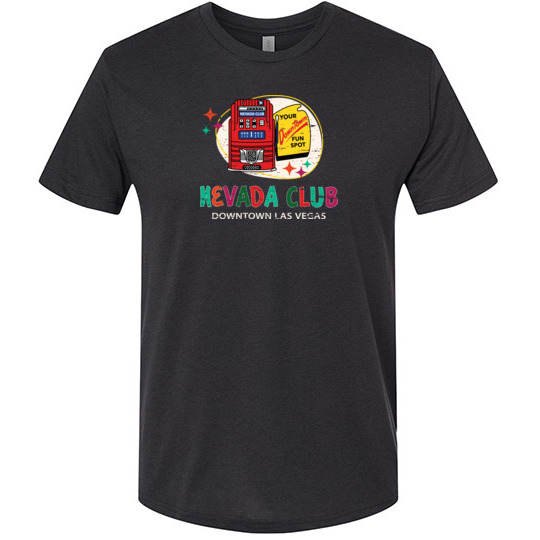
The mid-1950s proved pivotal. Under operator Robert Van Santen (who also ran the nearby Fortune Club), the Nevada Club carved out a distinct identity. They consciously marketed themselves as “Your Downtown Fun Spot” and “The Jackpot Spot,” differentiating themselves from the more high-roller focused casinos. Van Santen was more than just an operator; he was a disruptor. He ignited what’s now famously known as “The Great Las Vegas Slot Machine War.”
Van Santen understood the power of sensory stimulation and generous payouts. He offered significantly larger jackpots and innovated with features that would become industry standards: bells, revolving-light beacons, and most importantly, payoff trays designed to amplify the satisfying clatter of coins cascading down. This auditory spectacle acted as a magnet, drawing patrons and creating a lively, energetic atmosphere. It was an incredibly smart, low-tech marketing technique that proved highly effective.
A Grand Neon Combination & Shifting Identities
The Nevada Club’s evolution took a physical turn in 1957. A significant remodel saw the Nevada Club, Fortune Club, and the adjacent Western Union office physically combined into a single, larger casino. The result was a dramatically expanded marquee, stretching roughly 75 feet and adding an impressive burst of neon to Fremont Street’s already dazzling landscape. This expansion cemented the Nevada Club’s prominent position on the block.
Over the years, ownership changes and the ever-present pressure to stand out led to branding shifts. The casino cycled through names like Diamond Jim’s Nevada Club and Lucky Nevada Club, each attempting to capture a specific audience and flavor of entertainment. Even its architecture was cleverly designed to benefit neighboring clubs – cleverly cut holes in the ceilings allowed cocktail servers to deliver drinks directly to patrons without having to navigate the busy street.
A Legacy in Neon and Memory
The Nevada Club’s reign ended abruptly in 1969 when the Golden Nugget embarked on its westward expansion, absorbing the building and effectively claiming the entire south side of the 100 block. While the physical structure is gone, swallowed up within the Golden Nugget’s walls, the Nevada Club’s legacy endures. It lives on in vintage postcards, gaming guides, casino chips, and faded photographs – a tangible reminder of a bygone era of compact, neon-soaked casinos that defined the vibrant heart of classic downtown Las Vegas.