The Monte Carlo Club: A Tiny Casino, a Big Legacy in Vintage Las Vegas
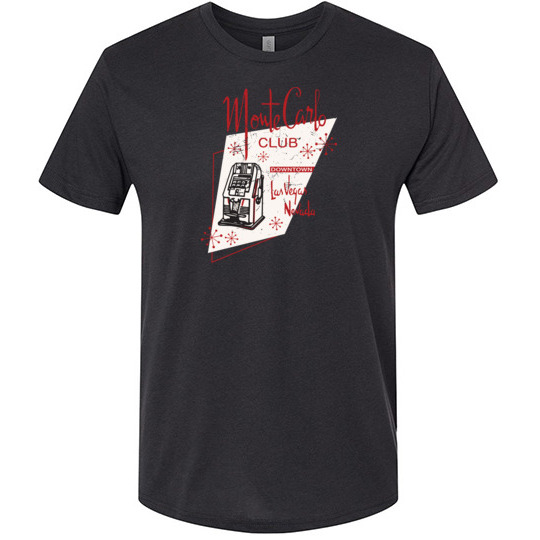
From Northern Club to Monte Carlo: A Fremont Street Evolution
Before the dazzling lights of the Las Vegas Strip, there was Fremont Street, the heart of early Las Vegas. And nestled at 15 Fremont Street, a modest building played a surprisingly significant role in the city’s gaming evolution: the Monte Carlo Club. Its story isn’t about sprawling casinos and elaborate shows, but about a crucial shift in how Las Vegas legalized and modernized its gambling scene.
The site wasn’t new in 1945. It had previously housed the Northern Club (1912-1943) and then the Turf Club (1943-1945), both operating under a more informal, pre-regulation gambling environment. But when Wilbur Clark and his partners leased the space and incorporated the Monte Carlo Club in 1945, something important changed. Clark, a name that would later become synonymous with the Las Vegas Strip thanks to his development of the Desert Inn, began his casino career here. He brought a full gaming profile: roulette, craps, blackjack, poker, and a 24-hour cocktail lounge, a more comprehensive and regulated offering than its predecessors.
The Transition to Modern Gaming
The Monte Carlo Club represents a pivotal moment. It wasn’t the first casino on Fremont Street, but it was among the first to embody the transition from loosely regulated gambling halls to more formalized and controlled casino operations. Clark brought a level of professionalism and modernization that helped lay the groundwork for the casinos we recognize today. Think of it as a stepping stone, connecting the wild west gambling days with the more structured, legal framework that would eventually define Las Vegas. The club’s establishment helped solidify Fremont Street’s reputation as the core gaming district.
A Brief, But Important Run
Clark’s involvement with the Monte Carlo Club was relatively short-lived. He sold his interest around 1949, quickly moving on to pursue his grander vision with the Desert Inn on the burgeoning Las Vegas Strip. Despite the change in ownership, the Monte Carlo continued operating as a casino until approximately 1956. After that, it reinvented itself multiple times – a bar & restaurant, then Denny’s, Sam’s Roast Beef, even a Coin Castle Casino and La Bayou Casino before finally meeting the wrecking ball in the mid-1960s.
A Legacy Preserved
Though its physical presence is long gone, absorbed into the footprint of the Golden Gate Hotel & Casino, the Monte Carlo Club’s legacy endures. The casino’s corporate documents, incorporation paperwork, and letterhead (1944-57) are preserved within the University of Nevada, Las Vegas Special Collections. They offer a fascinating glimpse into a smaller-scale gaming operation that helped shape the legend of Las Vegas. It serves as a reminder of a time when downtown Las Vegas felt smaller, more intimate, and more akin to the frontier spirit that first drew people to the desert. It’s a hidden chapter for vintage Vegas enthusiasts – small in scale, but incredibly important in understanding how Fremont Street and the Las Vegas gaming landscape evolved.