The Flamingo Capri Hotel & Casino: A Forgotten Bridge in Vintage Las Vegas Strip History
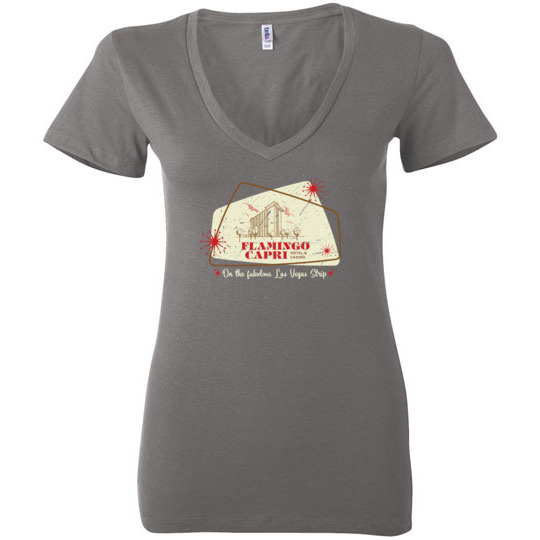
A Mid-Century Oasis: Introducing the Flamingo Capri
The Las Vegas Strip has always been about reinvention and evolution. While we celebrate the iconic names like the Flamingo and the Sands, sometimes the unsung heroes of that evolution get lost in the shuffle. Today, we’re diving into the story of the Flamingo Capri Hotel and Casino, a property that quietly played a vital role in the Strip’s transformation from a collection of motor courts to the dazzling resort landscape we know today. Opened on October 30, 1959, the Capri occupied a prime spot just north of the original Flamingo, on what’s now largely The LINQ.
The “Best of Both Worlds” Concept
The Flamingo Capri was the brainchild of George E. Goldberg and Bill Capri, the latter a Flamingo employee whose name became part of the hotel’s identity. The concept was clever: a luxury motel offering a more affordable price point, but still granting guests access to many of the Flamingo’s amenities. Imagine getting a taste of Flamingo luxury without the full price tag – that was the draw. The design, courtesy of architects Douglas Honnold and John Rex, embraced a contemporary motor-court style – low-rise buildings clustered around landscaped courtyards and parking areas. This layout offered a relaxed, approachable vibe, a welcome contrast to the increasingly grand, monolithic hotels springing up elsewhere on the Strip. Early advertising touted air conditioning, telephones, televisions, and 24-hour food service, solidifying its position as an upscale-but-accessible alternative.
A Taste of Italy & a Romantic (Flooded) Canal
The addition of the Flamingo Capri Restaurant in 1964 further established the motel’s independence. But perhaps the most memorable, and ultimately infamous, feature was the “Flamingo Wash.” Marketing spun the natural drainage ditch beneath the property as a romantic “Venetian canal,” a clever bit of Las Vegas flair. Unfortunately, this marketing proved a little too ambitious as periodic flooding, far from being romantic, became a recurring and disruptive problem!
Engelstad’s Vision & The Imperial Palace Transformation
The property’s trajectory took a significant turn in 1971 when Ralph Engelstad, a contractor and entrepreneur known for his aggressive business tactics, purchased the Flamingo Capri. Engelstad’s vision was grander. He added a casino in 1972, followed by new wings and the Shangri-La pool in 1974. Recognizing the limitations of the Capri brand, he began construction on a towering 19-story structure in 1977. In 1979, the entire complex underwent a massive rebranding, becoming the Imperial Palace. The original Flamingo Capri casino building met the wrecking ball to make way for the new entrance.
A Legacy Lives On
While the Flamingo Capri name is now just a memory, its influence remains. While the grand Imperial Palace has long been transformed into The LINQ, a surprising number of original Flamingo Capri motel rooms continued to be used for decades. They represent a tangible link to a pivotal era in Las Vegas history – a time when the Strip was transitioning from quaint motor courts to the dazzling resorts we know today. The Flamingo Capri, though often overlooked, helped pave the way for the modern Las Vegas, and its story is a fascinating testament to the constant evolution of the city’s legendary Strip.