The Eldorado Club Las Vegas: A Lost Gem of Vintage Fremont Street
A Frontier Welcome on Fremont Street
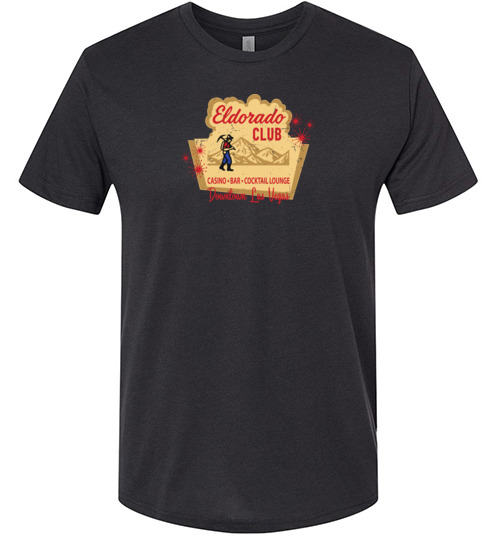
The late 1940s and early 1950s were a pivotal time for Las Vegas. Fremont Street, now synonymous with the dazzling Fremont Street Experience, was then a burgeoning gaming corridor transforming from a dusty outpost to a neon-drenched playground. Nestled at 128 Fremont Street, right next to the Boulder Club and across from the growing cluster of casinos, stood the Eldorado Club. It was a vital piece of that evolving landscape. Opened in 1947, the Eldorado embraced the prevalent Western theme of the era, promising “friendly gaming just off the trail” through its signage, matchbooks, and advertising.
The Heart of Early Fremont Gaming
The Eldorado Club wasn’t a sprawling mega-casino. It was a classic mid-size gambling hall, larger than a simple slot parlor but smaller than the giants like the Golden Nugget that would later dominate the scene. Its appeal lay in its approachable atmosphere. Inside, you’d find the familiar staples of the time – rows of vintage slot machines, single-deck 21 tables, craps, and a cozy bar. This mix drew a diverse crowd – working-class locals, railroad employees, and the burgeoning stream of tourists arriving via the newly-improved Highway 91. It represented a slice of Las Vegas that felt accessible and unpretentious, a welcome change from the more formal (and expensive) options that would later emerge on the nascent Las Vegas Strip. Operating under a non-restricted gaming license, the Eldorado functioned as a key player in the expanding downtown scene.
A Quick Transformation and the Rise of the Apache
The Eldorado Club’s story is a short but significant one. In 1951, Marvin Allen took over the operation, marking a turning point for the casino. Shortly thereafter, a bold move was made: the Eldorado Club was rebranded as the Apache Casino. This wasn’t an isolated incident. Downtown Las Vegas was becoming increasingly competitive, and operators frequently sought new identities to revitalize their businesses and attract a different clientele. The Apache was a brand refresh, intended to stand out in the increasingly crowded market.
The Apache Casino’s existence was brief as well. It would later become Max Baer’s Casino, and eventually the Boyd-run California Club. Today, the location is incorporated into the sprawling Golden Nugget complex, a testament to the constant evolution and consolidation of Las Vegas’s casino landscape.
A Legacy of Vintage Charm
While the Eldorado Club itself vanished from Fremont Street, its legacy endures. It represents a crucial period in Las Vegas history – a time when independent gambling halls defined the character of downtown. Before the corporate behemoths, before the mega-casino expansions, and before the Fremont Street Experience, casinos like the Eldorado offered a glimpse into a more intimate and authentic Las Vegas. Today, the site housing Binion’s Gambling Hall & Hotel stands as a reminder of that era. We can still find echoes of the Eldorado’s spirit in vintage photographs, matchbooks, faded gaming chips, and, most importantly, in the memories of those who experienced it – a fleeting but vibrant chapter in the rich and layered history of Las Vegas.